Last reviewed October 16, 2026. General information, not legal or professional advice. Check the linked sources for the current rules.
When the wet season runs
The National Weather Service office in Melbourne puts the median start of the wet season here at May 28, and the median start of the dry season at October 17 (NWS Melbourne). In between, the Atlantic and Gulf sea breezes push inland as the land heats up, and showers and thunderstorms form along them most days (NWS Melbourne study).
It doesn't rain every day. But storms build as the day warms, so a pour that starts late is betting on the sky.
Pour early in the day
NRMCA's hot-weather advice is to avoid the hottest part of the day for placing and finishing when you can. Heat makes concrete set faster, so finishing has to move faster too, and it raises how much water the mix wants (NRMCA CIP 12).
A morning pour helps on both counts. It's cooler, and the slab can be placed and finished before the afternoon weather has a chance to build. Book the truck for when the forms will really be ready, not when you hope they'll be ready.
Prep before the truck arrives
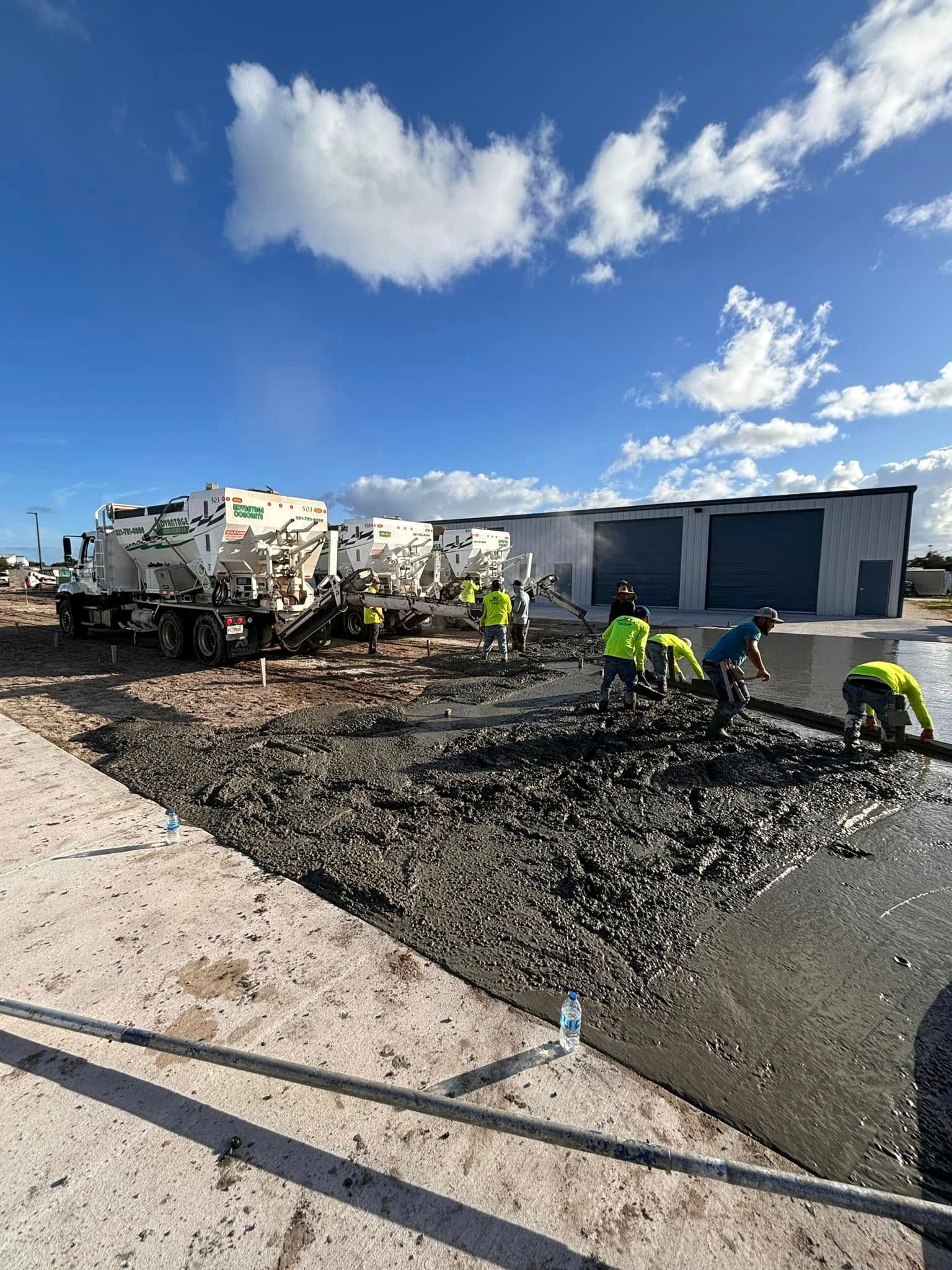
Concrete is perishable once it's mixed. NRMCA's guidance is that trucks should be able to discharge right away, with enough people on hand to place and handle the concrete (NRMCA CIP 12). With a site-mix truck nothing is mixed until you're ready, but once mixing starts the crew has to keep up. Before pour day, check off:
- Permits and inspections. Driveways and slabs need permits in many Brevard jurisdictions, and some want a pre-pour inspection. Our area pages cover the local rules.
- Locates. If you're digging footers or grading, Sunshine 811 needs two full business days' notice. The day you call doesn't count, and neither do weekends or holidays (Sunshine 811).
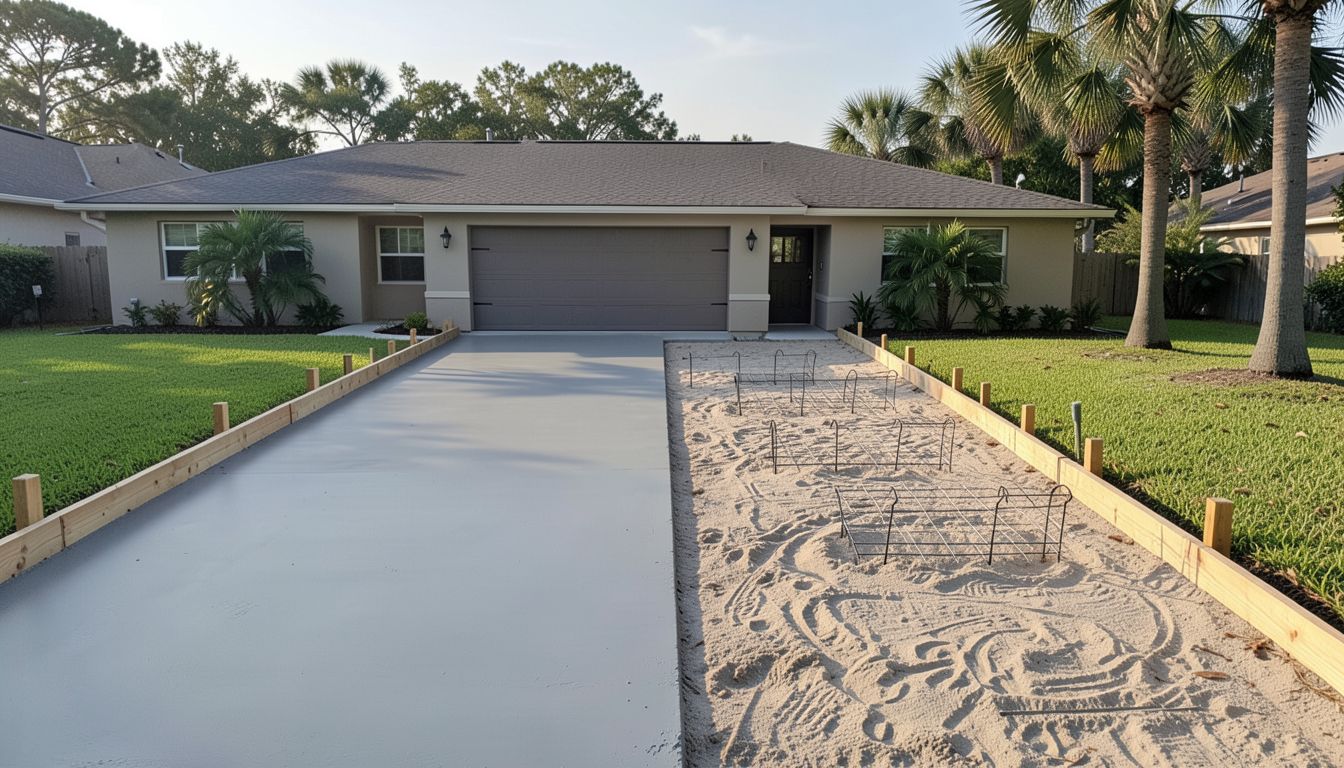
- Forms set, braced and checked for grade, with any steel or mesh the plans call for already in place.
- The base. On hot, dry days, NRMCA suggests dampening the base, the forms and the steel before the pour without leaving standing water (NRMCA CIP 12).
- Truck access. A loaded mixer truck is heavy. NRMCA says a loaded drum truck weighs about 80,000 pounds and may not get across loose dirt or residential curbs (NRMCA CIP 31). Decide where the truck parks and how the concrete gets from the chute to the forms.
- Curing supplies on site: curing compound, or wet burlap and plastic sheeting. Keep extra plastic within reach in case a storm rolls in.
During the pour
Hold off on extra water. Adding more than the mix design allows can make concrete separate, set late, crack more easily and lose strength (NRMCA CIP 31). NRMCA also says not to sprinkle water on the surface of a slab to make finishing easier (NRMCA CIP 12). It's tempting on a hot day. Don't.
If rain moves in before the surface has set, cover the slab and ask your finisher how they want to handle it. Heavy rain on concrete that hasn't set can mark the surface.
If you hear thunder, stop. The National Weather Service rule is "When Thunder Roars, Go Indoors!" It says there's no safe place outside when thunderstorms are in the area, and to wait 30 minutes after the last lightning or thunder before going back out (NWS). A crew standing on an open slab with metal tools is exactly who that's written for.
Curing in summer
Curing means keeping new concrete moist and at a reasonable temperature so it develops the strength and durability it was designed for. NRMCA says curing starts right after placing and finishing and typically runs 3 to 7 days (NRMCA CIP 11), and its hot-weather sheet says at least 3 (NRMCA CIP 12). CIP 11 also notes that concrete left in a dry environment can lose as much as half its potential strength compared with moist-cured concrete (NRMCA CIP 11).
The usual methods are a liquid curing compound sprayed on once the water sheen leaves the surface, wet burlap covered with plastic, or keeping the slab wet. White curing compound reflects heat and shows where it's been sprayed. If you're using plastic sheeting in warm weather, NRMCA recommends the white, reflective kind (NRMCA CIP 11).
Questions people ask
Can you pour concrete in the rain?
Light drizzle on a slab that's already finished and covered is one thing. Heavy rain on concrete that hasn't set can damage the surface. If storms look likely, move the pour earlier in the day or to another day.
How long before I can drive on a new driveway?
Let your contractor make that call. It depends on the mix, the weather and how the slab was cured, so there isn't one number that fits every driveway.
Should I wet the ground before the pour?
On hot, dry days NRMCA suggests dampening the base, forms and steel before placing concrete, without leaving puddles (NRMCA CIP 12).
Sources
- NWS Melbourne, Wet/Dry Season Onset
- NWS Melbourne, The Onset of the Wet and Dry Seasons in East Central Florida
- NRMCA, CIP 12: Hot Weather Concreting
- NRMCA, CIP 11: Curing In-Place Concrete
- NRMCA, CIP 31: Ordering Ready Mixed Concrete
- Sunshine 811, frequently asked questions
- National Weather Service, Overview: Lightning Safety